Unstaffed data centers
Built where power and cooling are cheap, far from the people who fix them.
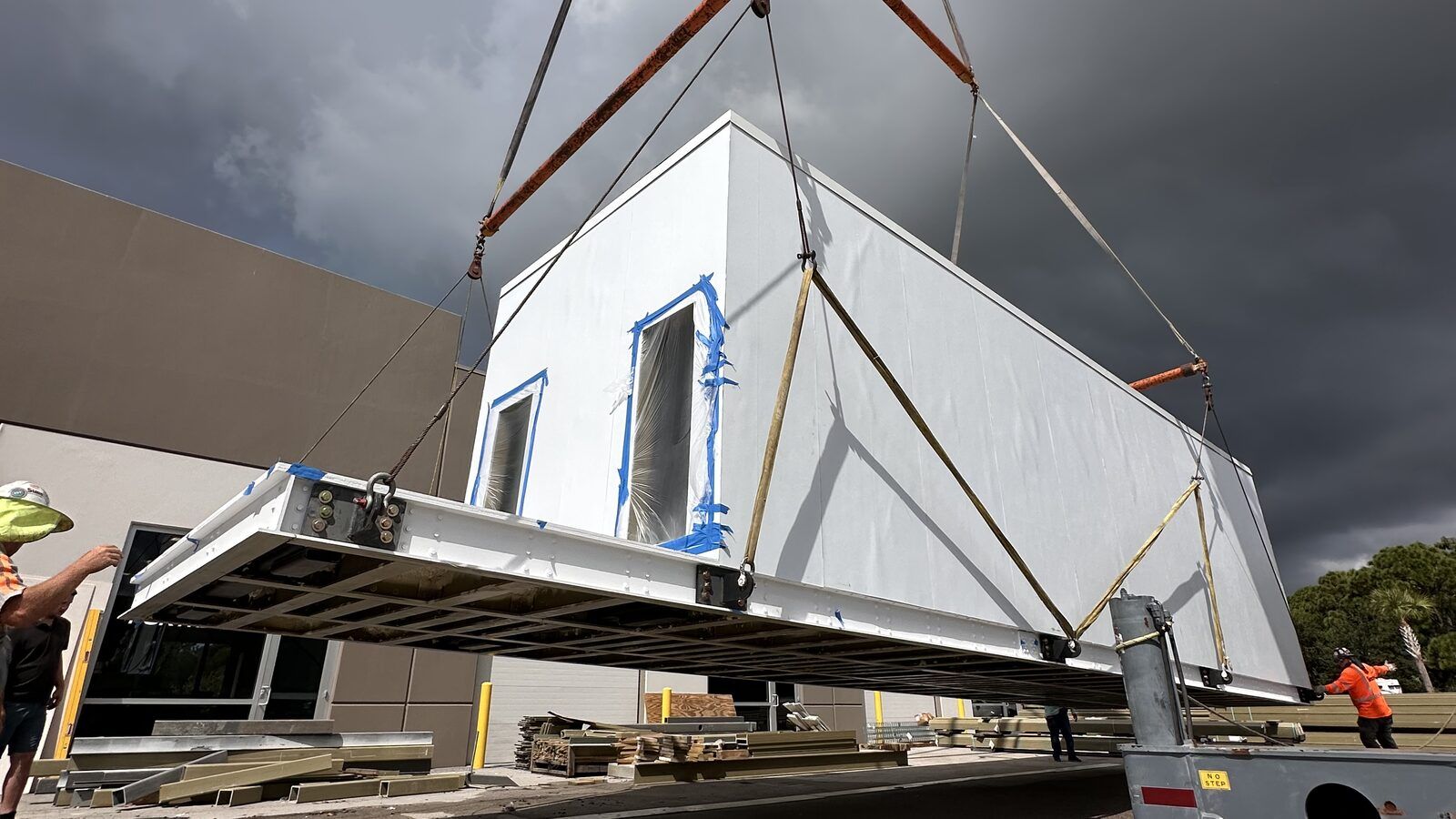
Microsoft sealed a pod of servers in dry nitrogen, 36 m down off Orkney, Scotland, from 2018 to 2020. Its failure rate was one eighth of a matching data center on land. It was not zero, and no failed server could be swapped until the pod came up.
Microsoft, Project Natick results, September 14, 2020
Data centers now go where power and cooling are: the seabed, remote renewable sites and orbit. Some are sealed for their whole life. When a server fails there, it stays failed until the next swap, or the end of the deployment.
Mru Field runs on the Linux processor already in the equipment, as three copies of your task. When a copy fails and nobody can come, it continues on the ones left and delivers only results it can check.
The figure shows that a sealed pod still loses servers, with no way to swap them. Mru does not stop servers from failing.
01
Parts fail one by one
Radiation, heat and age take out processors and memory. Nothing is replaced until the next visit.
02
Stored data decays
Flash wears out and bits flip. Logs and settings drift unless something checks them. Mru does not check stored data today.
03
No one to ask
When two processors disagree, there is no operator to say which one is right.
Three processors. Then two. Then one, still working.
Fixed triple redundancy stops when it loses its majority. Mru Field steps down instead, and says which mode it is in. Each extra processor costs power.
3 alive · vote
Three processors vote. One bad result is outvoted.
2 alive · compare
Two compare. On a mismatch, a known-answer test can find the faulty one.
1 alive · self-check
The last one checks its own work and keeps the control loop running until the pod comes up, at half speed.
Power
Grid, renewable or seafloor cable
Link
Fiber, usually good
Visits
Never for sealed pods; days to weeks for edge sites
Service life
Years per deployment
Questions
Does Mru Field need new hardware?
No. It is software for the Linux processor you already deploy. It runs beside your control code as three replicas of your task and decides which replica to trust as faults appear. Each replica costs processor time. A second processor, which would survive the failure of the first, is planned.
Does Mru protect the main workload?
No. Each replica costs processor time, so Mru fits the small task whose result decides: control, failover, health checks and logs. The workload keeps its own redundancy.
Is Mru Field for staffed data centers?
No. Where staff can swap a failed server in minutes, a repair visit is cheap. Mru fits sites where no one can get in. For data centers in orbit, see Mru Flight.
How do we start?
Use the form below. We first model your hardware and show what each redundancy design returns over its whole life. Then we plan a pilot on your own equipment.